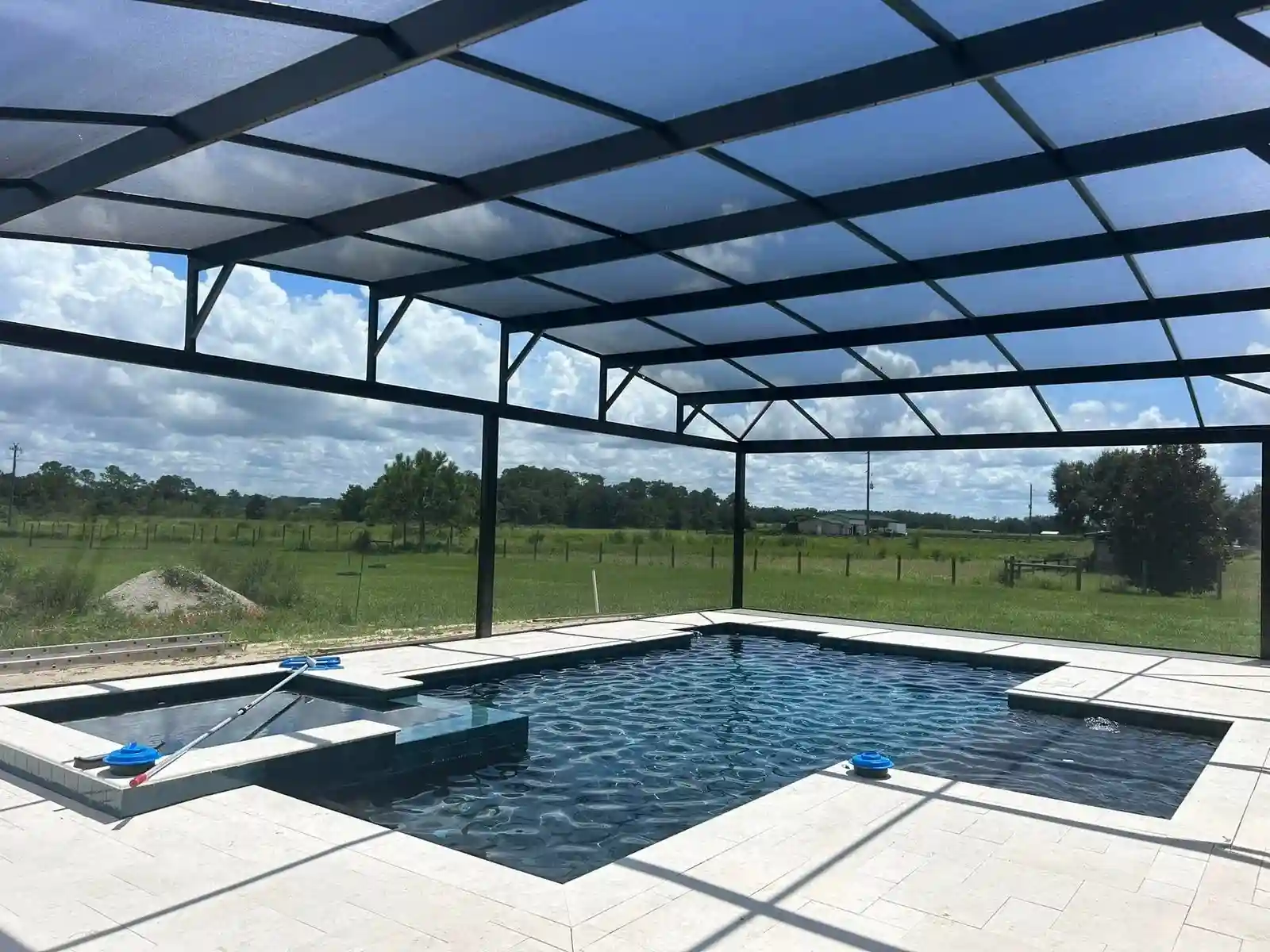
Installing a pool screen enclosure in Florida typically ranges from $12,000 to $30,000+, with final costs influenced by size, structural requirements, wind-load ratings, and site conditions.
Due to Florida’s strict building codes and hurricane resistance standards, these enclosures go beyond basic aluminum frames and mesh. Factors like engineered plans, permitting, reinforced footings, proper drainage, and wind-rated materials all play a key role in overall pricing.
In this guide, a Florida Precision Screen professional explains typical pool screen enclosure costs and the key factors that influence pricing. It also covers how wind zones affect design and how enclosures fit into your overall pool project budget.
What Is the Average Cost of Installing a Pool Screen Enclosure in Florida?
The cost of a pool screen enclosure in Florida is mainly determined by size, overall height, wind-load requirements, and the level of engineering involved in the structure. Here’s a general breakdown of professionally installed enclosures:
- Small Enclosures (around 20×30 ft/600 sq ft): Between $12,000 to $20,000
- Medium Enclosures (around 30×50 ft): Between $17,000 to $30,000+
- Large or Fully Custom Enclosures: Between $30,000 to $75,000+
These estimates typically cover aluminum framing, mesh screening, structural footers, and standard installation. Final costs may vary based on wind-load compliance, site accessibility, and any material or design upgrades.
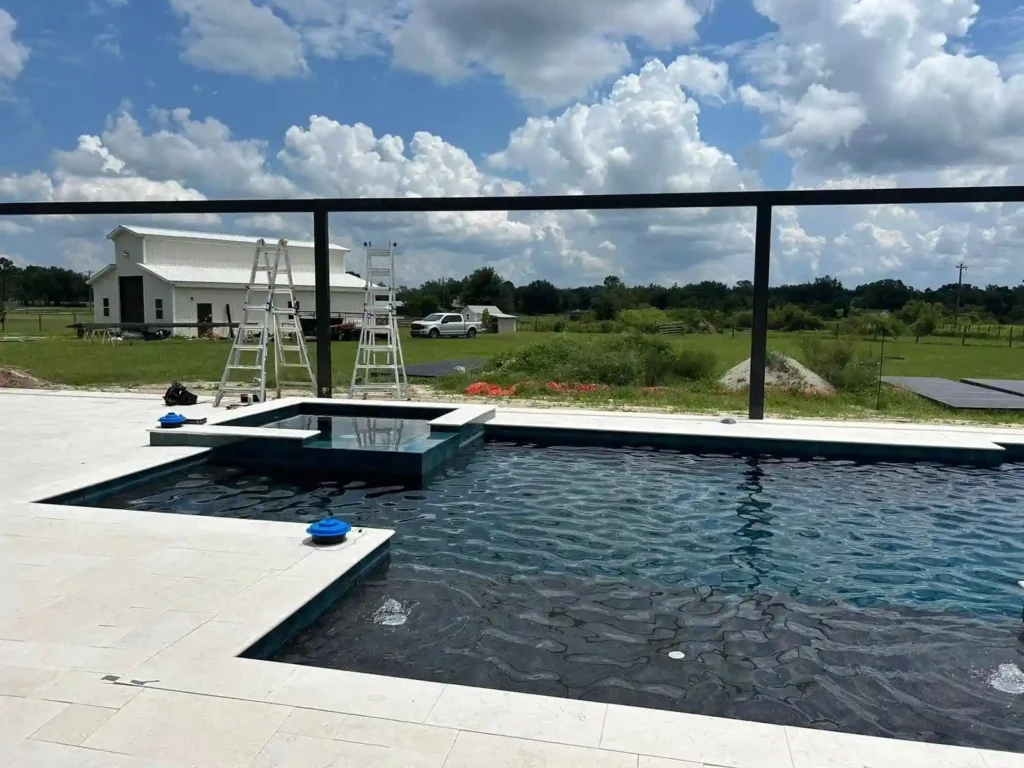
What Factors Increase the Cost of a Pool Screen Enclosure in Florida?
The final price of a pool screen enclosure in Florida is not based on size alone. Several structural, design, and site conditions can significantly influence the overall cost.
7 Important Factors that Affect the Cost of a Pool Screen Enclosure
Wind Load & Hurricane Engineering
Florida pool screen enclosures must meet strict hurricane standards, often designed to withstand wind speeds of 150–160+ mph in coastal regions. This requires reinforced aluminum framing, deeper concrete footings, and certified engineering plans for safety and compliance.
Roof Design & Height
Roof style and height, such as gable, dome, or mansard, affect material use and structural complexity. Standard 10–12 ft enclosures cost less than taller 14–20 ft custom designs requiring extra reinforcement.
Engineering Drawings & Structural Plans
Most pool screen enclosure projects require engineered drawings to comply with local building codes. These structural plans usually cost between $1,000 to $2,000, depending on the project’s complexity.
Permit Fees
Local permit fees typically range from $200 to $800, depending on the municipality and required inspections. These costs can vary based on local regulations and project scope.
Upgraded Screen Options
Specialty mesh options like no-see-um, solar shading, or pet-resistant screens provide enhanced durability and comfort. Depending on the enclosure size, these materials can add approximately $3,000 to $5,000+ to the overall cost.
Drainage & Deck Adjustments
Effective drainage systems, such as gutters and downspouts, are often required to prevent water from pooling inside the enclosure. These additions may also require minor deck modifications or slope adjustments to ensure proper water flow, which can further increase the overall installation cost.
Lighting & Electrical Work
Installing ceiling fans, LED lighting, or electrical fixtures typically adds $1,000–$3,500+ to project costs, depending on setup. These upgrades require 50–150+ feet of wiring, dedicated circuits, and licensed electrical installation, increasing both labor time and overall complexity.
Florida Building Code & Permit Requirements for Pool Screen Enclosures
In Florida, pool screen enclosures are considered regulated structures and must fully comply with the Florida Building Code.
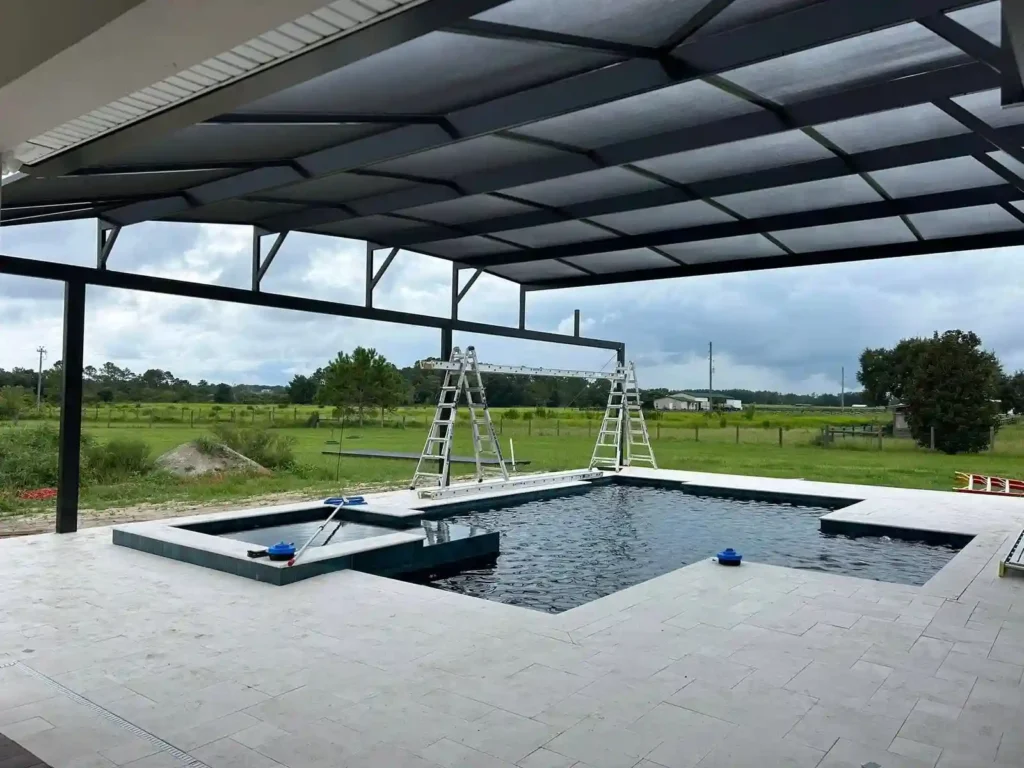
Permit & Inspection Process
Most projects typically involve obtaining a structural building permit, along with certified engineering documents to ensure proper wind-load compliance. Inspections are also required at key stages, including footing inspections during construction and a final approval once the structure is complete.
Coastal, Zoning & Location-Based Requirements
In coastal and high-wind areas, additional reinforcement such as stronger framing and extra anchoring systems is often necessary. Local zoning rules, property setbacks, and land surveys can also affect where and how the enclosure is built.
Since requirements differ by city and county, both approval timelines and permitting processes can vary significantly across Florida.
Integrating a Screen Enclosure with a New Pool Installation
When installing a new fiberglass pool in Florida, many homeowners plan the screen enclosure alongside the pool construction for a more efficient and coordinated build. Coordinating the enclosure with the pool design helps achieve:
- Adequate deck space for structural footers
- Proper water drainage and surface flow management
- Optimal placement of pool equipment and utilities
- Streamlined permitting and approval sequencing
Planning both the pool and enclosure together reduces the risk of design conflicts, avoids unnecessary construction delays, and improves overall project efficiency. Since enclosures are built by licensed contractors, it is still important to include them in your initial backyard budget and design plans from the beginning.
Is a Screen Enclosure Worth the Investment in Florida?
For many homeowners in Florida, a screen enclosure is viewed as an essential part of the pool area rather than a luxury addition.
- Essential Backyard Feature: Many Florida homeowners consider screen enclosures a necessary part of pool areas, not just an upgrade, improving everyday outdoor living comfort.
- Cleaner and Low-maintenance Pool: It blocks leaves, debris, and insects while offering partial sun protection, helping maintain cleaner water and reducing cleaning effort.
- Location-based Value: Worth depends on surroundings, landscaping, neighborhood standards, and personal lifestyle needs, especially in coastal and suburban regions.
- Common Community Standard: In many Florida areas, screened pool enclosures are widely installed and often expected as part of modern backyard designs.
- Smart Budgeting Approach: Including the enclosure in overall backyard planning ensures a more accurate and realistic total project investment estimate.
Best Pool Cage Painting & Rescreening Company Near Me in Florida
If you own a property anywhere in Florida—from Orlando to Sarasota—Pool Paint Screen LLC is a trusted choice for professional pool cage painting, repair, and rescreening services. We proudly serve multiple Florida counties, including:
- Orlando
- Kissimmee
- Sanford
- Lake Mary
- Oviedo
- Winter Park
- Apopka
- Ocoee
- St. Cloud
- Altamonte Springs
Need pool enclosure repair or restoration? Contact us today for a free estimate and reliable service.
Closing of the Guide
A pool screen enclosure in Florida typically costs between $12,000 and $30,000+, depending on size, design, and structural requirements. Larger or fully custom-built enclosures can exceed $75,000 due to added engineering, wind-load ratings, permits, and upgraded materials. Roof height, layout complexity, and site conditions also play a major role in final pricing.
Florida’s strict building codes and hurricane-resistant standards require reinforced aluminum framing, certified engineering plans, and proper installation methods. These regulations ensure safety, strength, and long-term durability, but they also increase overall project costs compared to standard outdoor structures in other regions.
Additional factors such as drainage systems, electrical features, and property accessibility can further affect the total investment. Understanding these cost drivers helps homeowners plan realistic budgets while ensuring a safe, compliant, and long-lasting pool enclosure.
Read Next: How Much Does Soffit, Fascia & Gutter Replacement Cost?
FAQs About Pool Enclosures
Why Are Pool Enclosures in Florida So Expensive?
Florida pool enclosures are expensive due to high demand, rising aluminum costs, and skilled labor shortages. Prices typically range from $18,000 to $30,000+ because structures must meet strict hurricane codes and use reinforced, wind-resistant materials. High demand and limited contractors also increase pricing and project timelines.
Are pool screen enclosures mandatory under Florida HOAs?
No, HOAs in Florida usually don’t require screen enclosures but regulate their design, materials, and placement through approval processes. Many homeowners still install them for added comfort, pest protection, and cleaner pools, even though they are not legally or HOA-mandated requirements.
Do high-wind areas affect pool screen enclosure costs?
Yes! In hurricane-prone and high-exposure wind regions, pool enclosures require stronger aluminum framing, deeper concrete footings, and reinforced anchoring systems. These upgrades improve structural safety but also increase overall project cost due to higher material strength and engineering requirements.
How long does it take to install a screen enclosure in Florida?
In Florida, the full process usually takes 8–12 weeks from start to finish. Most of this time is spent on permit approval and engineering (2–4 weeks), while the actual installation on-site only takes about 5–10 days, depending on size and design.