Can You Actually Tan Through a Screen Enclosure
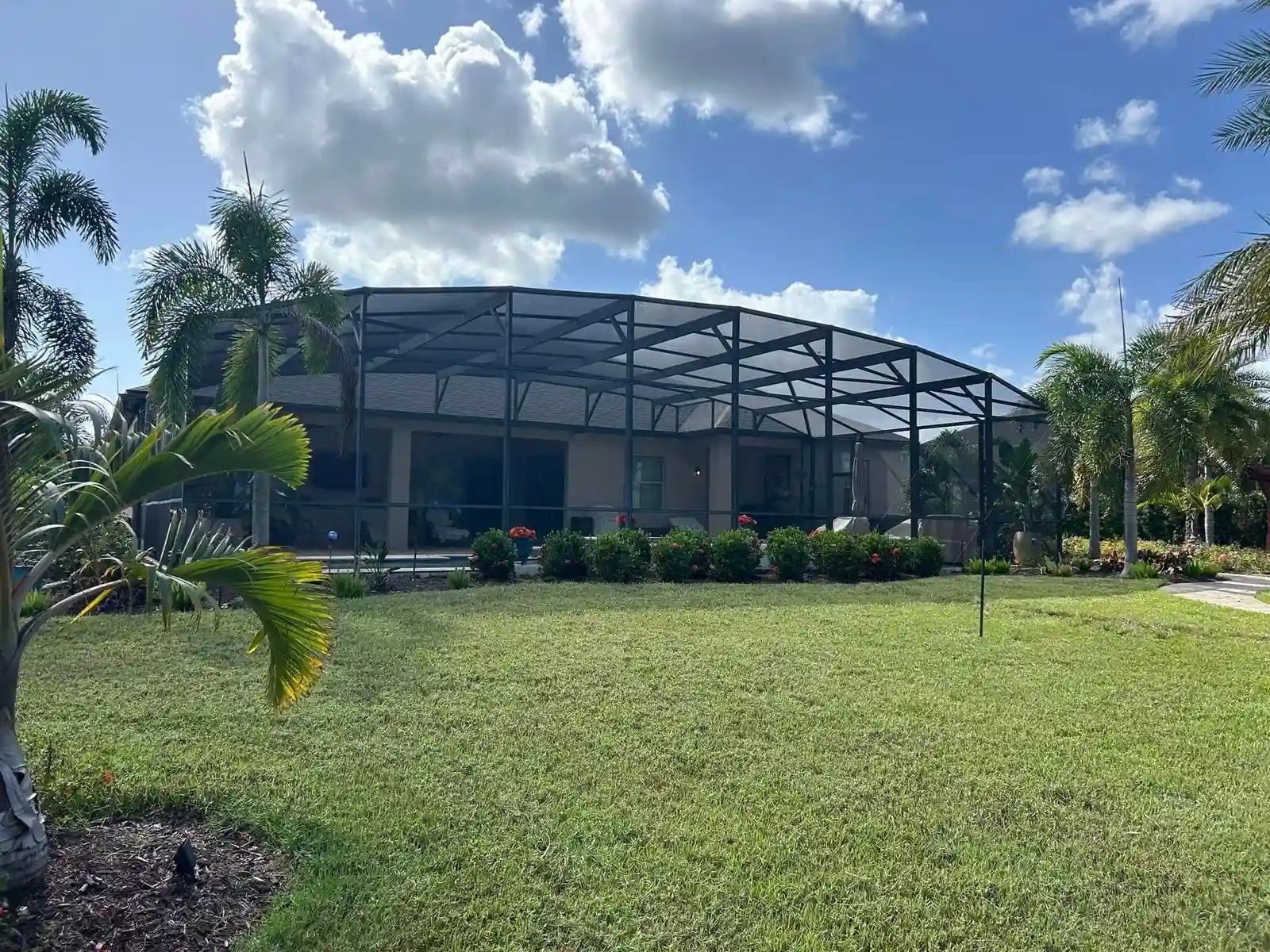
Yes, you can tan through most screen enclosures. While they keep insects out and reduce direct sunlight, they do not completely block UV rays. This means you can still develop a tan or even experience sunburn during extended outdoor exposure.
The amount of UV radiation that reaches your skin depends on factors such as screen material, mesh density, and the intensity of the sun. In Florida, enough UV rays often pass through screened areas to affect your skin over time.
Understanding how screen enclosures affect UV exposure can help you make smarter decisions about sun protection and outdoor comfort. It also allows you to choose the right enclosure materials while enjoying your outdoor space more safely throughout the year.
Why Screen Mesh Doesn’t Equal Sun Protection
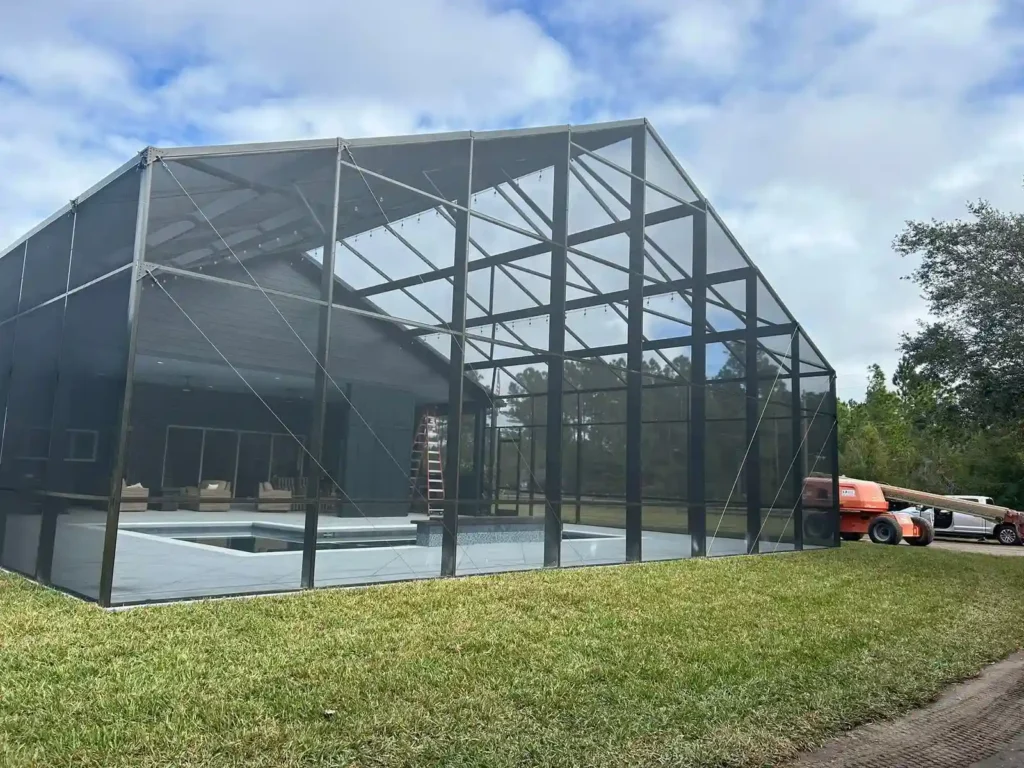
Most screen enclosures are built to improve comfort, airflow, and insect protection—not to shield your skin from UV exposure. Even when an area feels shaded, ultraviolet rays can still pass through the mesh.
- Wide Mesh Openings: Standard screen materials contain openings large enough for UV rays to penetrate, allowing gradual tanning and potential sun damage.
- Limited UV Defense: Most patio and pool screens are not engineered with certified UV-blocking technology, leaving significant UVA and UVB exposure.
- Ventilation Priority: Screen systems are designed to maximize airflow and visibility, rather than absorb, reflect, or block solar radiation.
Shade Doesn’t Mean Protection
- Solar Screen Difference: Solar screens use denser materials that reduce heat and sunlight, but they still cannot fully prevent UV exposure.
- Light vs. UV Control: Dense meshes scatter visible light and lower glare, yet enough UV radiation often passes through to affect skin.
Screen Material Makes a Measurable Difference
Not all screen fabric performs the same way. The material your enclosure uses is probably the single biggest factor in how much UV reaches you.
Standard Fiberglass Mesh
This fiberglass mesh is the most widely installed option. It’s a cost-effective screen enclosure that offers good visibility and handles Florida’s humidity well. It also allows a substantial portion of UV light to pass through, both UVA and UVB, making tanning and burning entirely possible during extended outdoor sessions.
No-see-um Mesh
Uses a tighter weave, typically 20×20 strands per inch, versus the standard 18×14. The denser pattern does reduce UV transmission compared to standard mesh, but the difference is incremental rather than dramatic. It’s primarily chosen for fine insect exclusion, not sun protection.
Solar Screens
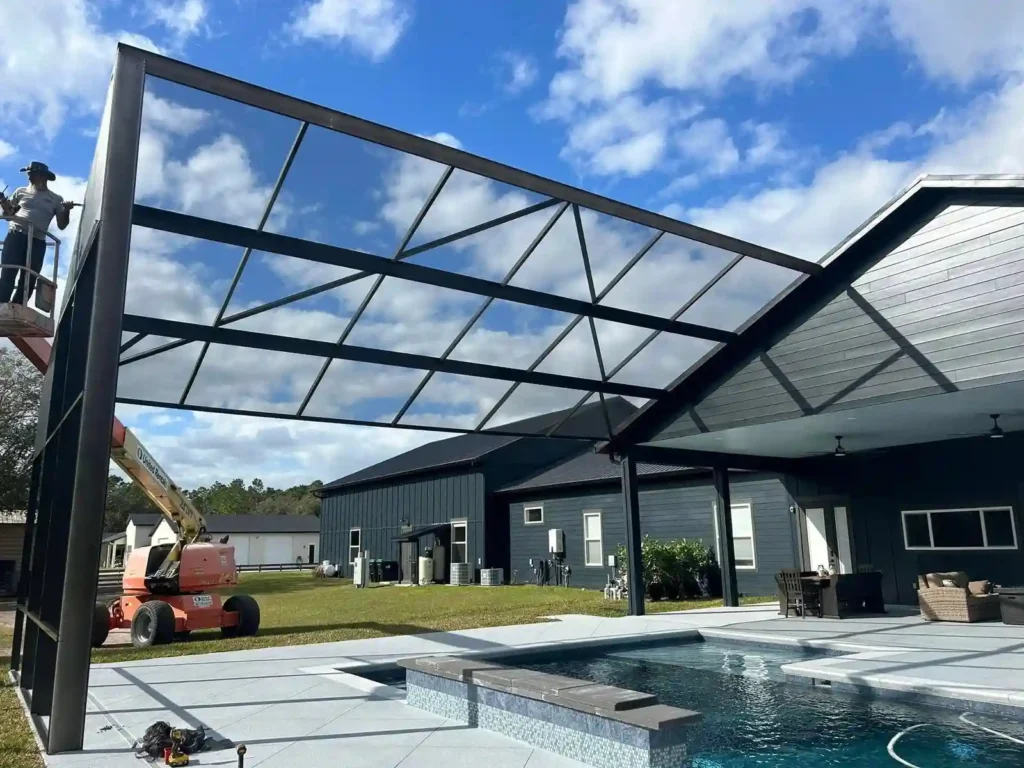
These screens are the only category specifically engineered with UV reduction as a primary function. They use darker, denser yarns that absorb and reflect a larger share of solar energy. Homeowners who install solar screens report noticeably less glare, lower surface temperatures, and reduced tanning, but also reduced natural light inside the enclosure.
The Trade-off Is Real
More UV protection typically means a dimmer, slightly more enclosed feel. Knowing your priority before installation saves a lot of second-guessing later.
What Mesh Density Numbers Actually Tell You
When contractors reference screen specifications, they’ll often cite a weave count like 18×14 or 20×20. These numbers describe how many vertical and horizontal strands exist per square inch of mesh.
A higher count means smaller openings between strands. Smaller openings mean less light transmission, slightly reduced airflow, and modestly lower UV penetration. The difference between 18×14 and 20×20 isn’t dramatic for UV purposes, but when combined with a UV-resistant yarn coating, the cumulative effect becomes more meaningful.
| At Florida Precision Screens, clients are guided through screen enclosure installation in Florida options while balancing visibility, airflow, and solar performance when selecting screen materials. This is especially important for south-facing pool enclosures that receive prolonged sun exposure throughout the day. |
Sun Angle and Enclosure Orientation: Add Another Layer
Even with identical screen material, two enclosures can deliver very different UV exposure based purely on geometry.
A south-facing enclosure in Central or South Florida receives near-direct overhead sun for the bulk of the afternoon. The sun’s rays hit the roof screen at a steep angle, passing through with minimal diffusion. Exposure under these conditions is significantly higher than in a north-facing or heavily shaded enclosure.
Time of day compounds this. Between 10 a.m. and 2 p.m., the UV index peaks and the sun’s angle maximizes radiation transmission through horizontal screen panels. Even with filtered sunlight, two hours under a screen enclosure can deliver significant UV exposure, especially around reflective pool decks that intensify UV rays.
Practical Skin Protection Inside a Screen Enclosure
Because many people feel cooler and more comfortable under a screen enclosure, they often stay outside longer than they would in direct sunlight. That extended exposure time can increase total UV dose compared to shorter, unfiltered sessions.
Few Habits that Help
- Apply Sunscreen Early: Use SPF 30 or higher before outdoor exposure so protection is active when you first step outside.
- Reapply After Swimming: Most sunscreens lose effectiveness in water, making reapplication essential after swimming or heavy sweating.
- Wear Protective Clothing: Lightweight hats and UV-rated shirts add extra protection without making outdoor activities feel uncomfortable.
- Choose Shaded Seating: Sit away from direct overhead sun, especially near screen walls, to reduce cumulative UV exposure.
Wrapping Up
A screen enclosure changes your relationship with the sun; it doesn’t end it. UV rays pass through standard mesh consistently enough to tan and burn, especially during long Florida afternoons. The screen material, weave density, enclosure orientation, and time of day all interact to determine your actual exposure. Solar screens reduce it meaningfully; standard fiberglass reduces it modestly.
The most important shift is in mindset: treating a screen enclosure as a UV filter rather than a sun barrier. That means sunscreen still matters, peak-hour awareness still matters, and screen material selection still matters when you’re building or upgrading an enclosure.
Knowing how your specific setup performs gives you real control over how you use your outdoor space and how you protect your skin while doing it.
Get Expert Screen Enclosure Advice at No Cost
For a screen enclosure that matches your comfort, UV protection, and design goals, Florida Precision Screens is here to help. Contact us today for a free consultation and expert guidance on choosing the right mesh for your home. Get in touch now to upgrade your outdoor space with confidence and clarity.
Frequently Asked Questions
Can you get vitamin D through a screen enclosure?
Yes! Because standard screen mesh doesn’t fully block UVB rays, the wavelength responsible for vitamin D synthesis, your body can still produce vitamin D during extended time under a screened enclosure. Solar screens reduce this more significantly than standard mesh, but even with higher-density materials, some UVB typically passes through.
Does a screen enclosure slow tanning compared to direct sun?
Yes, noticeably so! Standard mesh reduces UV intensity, which means tanning takes longer under an enclosure than in direct sunlight. The degree of slowdown depends on your screen material; solar screens create a much more pronounced effect than basic fiberglass mesh. If an even tan is a priority, tracking your position relative to peak sun angles matters.
Will a darker screen color block more UV than a lighter one?
Generally, yes! Darker screen yarns absorb more solar radiation rather than transmitting it. This is one reason solar screens are typically charcoal or dark gray; the color is functional, not just aesthetic. For standard fiberglass mesh, the difference between light and dark versions is modest, but in solar-rated products, it contributes meaningfully to overall UV performance.
Can screen enclosures affect how sunscreen performs on your skin?
Indirectly, yes! Under a screen enclosure, people often stay outside longer because the environment feels cooler and more comfortable. This extended exposure time can exceed the effective window of your sunscreen application; most formulas begin degrading after 80 to 90 minutes, faster if you’ve been in the water. Reapplication every 90 minutes remains important regardless of your screen type.
Does Florida Precision Screens help homeowners choose the right mesh for their UV and comfort goals?
Yes! Florida Precision Screens helps homeowners choose screen materials that align with their goals, whether that’s increased sunlight, reduced heat, or improved UV control. Since every property receives different levels of sun exposure, their team provides personalized recommendations during the estimate process, ensuring you understand the performance and benefits of your enclosure before installation.