Why Florida Homeowners Choose Screened Pool Enclosures
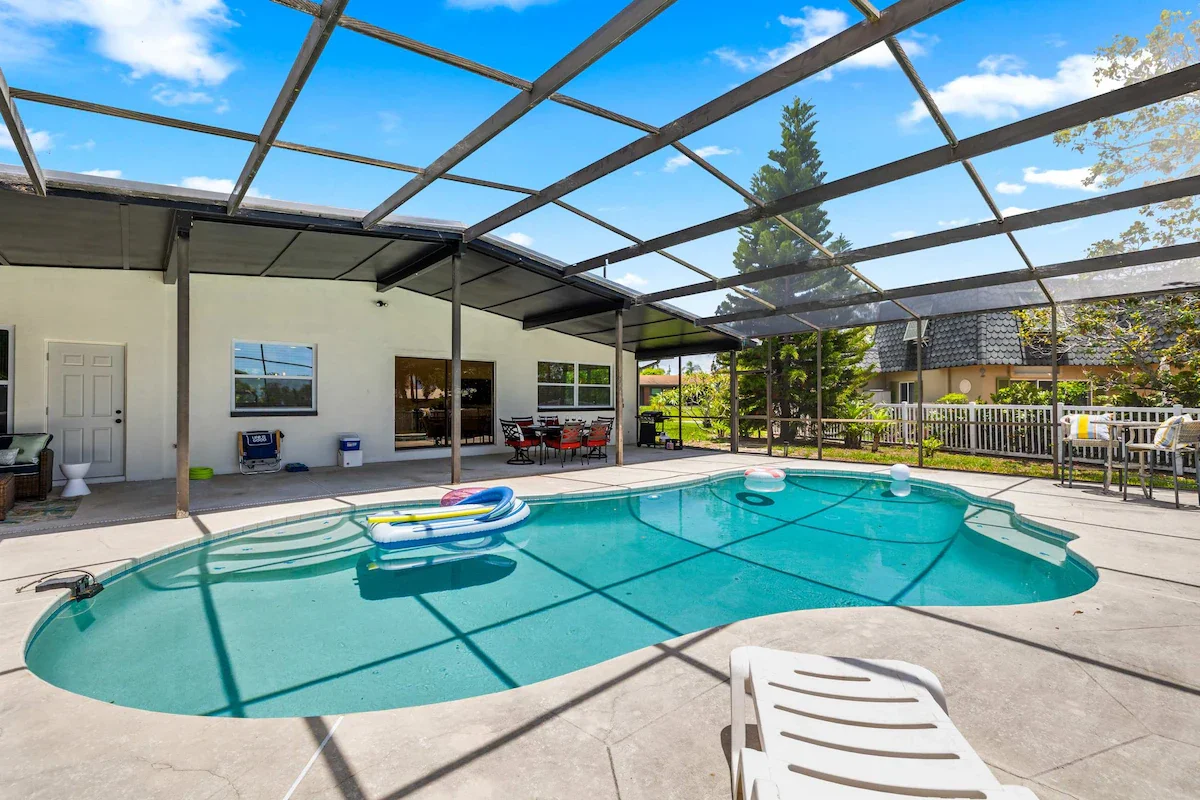
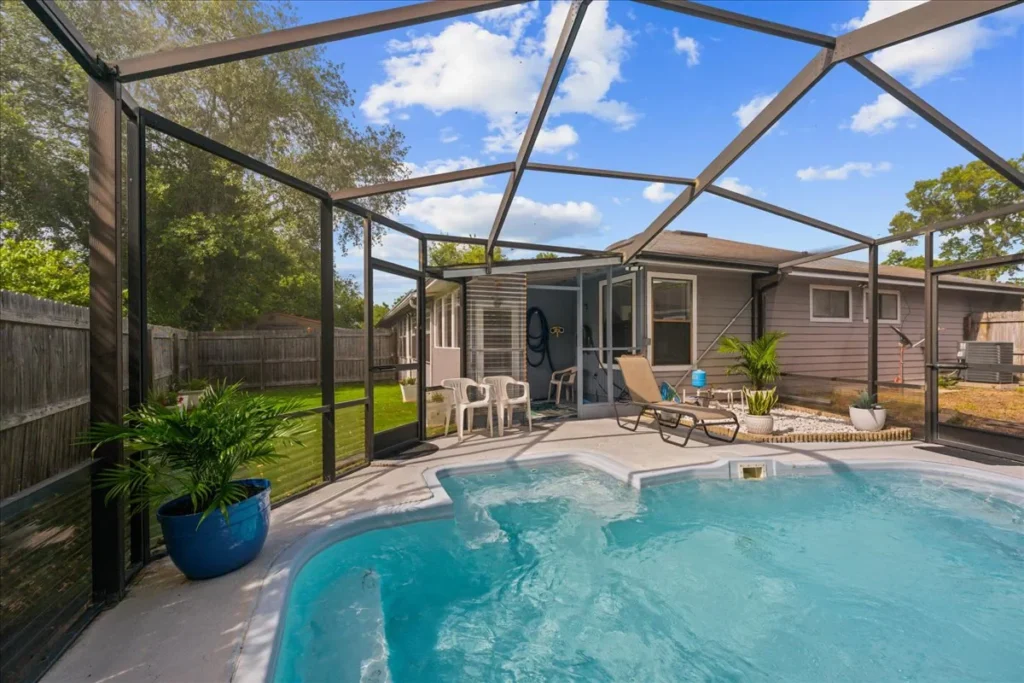
Drive through almost any Florida neighborhood, and you will notice something right away: nearly every backyard pool sits inside a massive screened aluminum structure. If you moved here from out of state, this design feature might look unusual at first. In the sunshine state. However, it is simply the standard for outdoor living.
So, why do homes in Florida have screened pools in the first place? The short answer is a combination of extreme climate pressures, aggressive local insect populations, strict safety compliance laws, and long-term maintenance savings.
At Florida Precision Screens, we design, install, and maintain high-wind pool enclosures in Florida and its surrounding area. In this guide, we break down why screened pools are everywhere in Florida, what these structures are called, and how they add lasting value to your home.
What Is an Enclosed Pool in Florida Called
Before learning into the benefits, it helps to understand local terminology. An enclosed pool in Florida is typically referred to by three common terms:
- Pool Cage: The most widespread term used by Florida locals, contractors, and real estate agents to describe the full aluminum-frame structure.
- Pool Screen Enclosure: The formal industry term used by engineers, builders, and county permitting departments.
- Screened Lanai: Technically refers to the covered patio/porch area attached to the back of the house, though often used interchangeably when the screen extends over the entire pool deck.
All three terms describe the same essential system. An engineered structural aluminum frame fitted with specialized screen mesh that encapsulates the pool area and seamlessly integrates with the home’s architecture.
5 Core Reasons Why Florida Pools Are Screened In
There is no single reason why enclosures are standard across Florida. Instead, it comes down to a mix of lifestyle benefits and environmental challenges.
1. Protection Against Pests & Wildlife
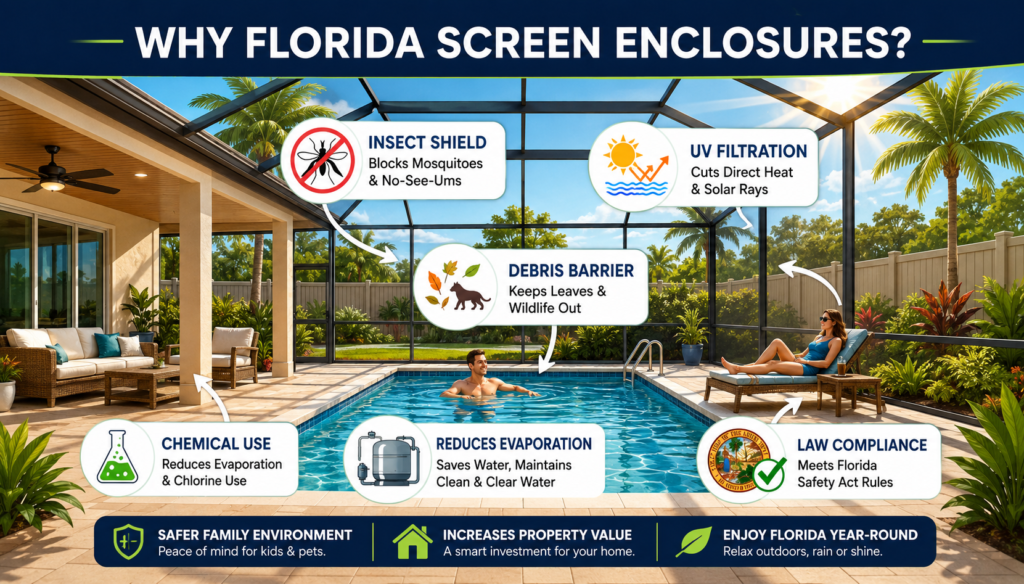
Florida’s warm, sub-tropical climate breeds high concentrations of biting insects.
- Mosquitoes & No-See-Ums: Standard 18×14 weave screen blocks mosquitoes, while specialized 20×20 micro-mesh stops tiny biting midges (“no-see-ums”) near coastal or marshy zones.
- Unwanted Wildlife: A secure screen barrier stops frogs, snakes, lizards, wasps, and birds from invading your pool deck or getting trapped in the water.
2. UV Ray & Heat Reduction
Florida experiences some of the highest solar irradiance levels in the country. Quality screen mesh acts as a subtle shade cloth, filtering out 10% to 30% of direct UV radiation. This helps keep the pool deck cooler underfoot and offers extra sun protection during peak summer months.
3. Reduced Debris & Maintenance Time
During Florida’s daily afternoon summer thunderstorms, high winds deposit oak leaves, pine needles, dirt, and palm fronds everywhere.
- Without a screen enclosure, pool owners spend hours skim-netting debris or clearing clogged skimmer baskets.
- With an enclosure, your pool stays clean year-round, significantly reducing wear and tear on your pool pump and filtration equipment.
4. Savings on Chemicals and Water Evaporation
Direct sunlight quickly breaks down free chlorine through photo-oxidation, forcing un-enclosed pool owners to add balance chemicals far more frequently. Additionally, solar heat accelerates water evaporation. By partially shading the pool surface, screen cages reduce water loss and cut chemical maintenance costs by up to 30–40%.
5. Home Resale & HOA Standards
In many master-planned communities across Florida, screened pool enclosures are part of the original builder plans or enforced by HOA design guidelines. Buyers moving to Florida actively search for homes with existing enclosures, viewing them as a complete outdoor living room rather than an extra project to build later.
Do Pools in Florida Have to Be Enclosed by Law?
Homeowners frequently ask if pool enclosures are mandatory. The answer requires a distinction between enclosures specifically versus safety barriers generally.
The Legal Reality: Florida law does not mandate a screen enclosure by name. However, state law does mandatory-enforce a child safety barrier around every residential swimming pool.
Florida Residential Swimming Pool Safety Act (Chapter 515, Florida Statutes)
Under the Florida residential swimming pool safety act (F.S. 515), all new pools (and homes sold/transferred) must utilize at least one approved safety feature to prevent drowning accidents:
- Minimum Height Requirement: A continuous pool barrier or fence that stands at least 4 feet (48 inches) high on the outside with no climbable footholds.
- Complete Pool Isolation: A full structural pool screen enclosure that completely isolates the pool area.
- Certified Safety Protection: An approved ASTM-compliant safety pool cover.
- Secure Access Control: Self-closing and self-latching devices on all gates or doors providing access, installed at least 54 inches above the ground.
- Early Warning System: Exit alarms on all doors and windows leading directly from the home to the pool zone.
Because a screen enclosure satisfies all state safety barrier requirements while simultaneously solving insect, debris, and UV issues, the vast majority of Florida homeowners choose a pool cage over a simple perimeter fence.
Comparing Your Options: Screen Enclosure vs. Pool Fence
| Feature | Pool Screen Enclosure (Pool Cage) | Traditional Pool Fence |
| Florida Code Compliance | Meets Florida residential pool safety requirements when installed as a compliant safety barrier* | Compliant when at least 48 inches high with a self-closing, self-latching gate |
| Insect & Pest Protection | Helps keep out mosquitoes, flies, wasps, and other pests | No protection from insects or pests |
| Leaves & Debris Control | Blocks most leaves, twigs, and windblown debris, reducing pool cleaning | Leaves and debris can easily blow through or over the fence |
| UV & Sunlight Reduction | Screens can reduce approximately 10–30% of UV rays while allowing natural light | No UV or shade protection |
| Wind Resistance | Engineered to meet Florida wind load requirements, typically 140–170+ mph depending on location and code | Varies by material, design, and installation quality |
| Pool Maintenance | Reduces cleaning time and helps protect pool equipment from excess debris | Does not reduce maintenance requirements |
| Visibility & Aesthetics | Open, unobstructed views while maintaining a modern appearance | May partially or completely block the view depending on the fence style |
| Outdoor Comfort | Creates a more enjoyable outdoor space by reducing bugs and airborne debris | Provides safety only, without improving outdoor comfort |
Engineering Considerations: Roof Styles & Wind Codes
Modern pool enclosures are highly customizable and must adhere strictly to the Florida Building Code (FBC) wind load standards (ASCE 7).
Popular Structural Roof Designs
- Gable (A-Frame): Features a pitched roof with two sloping sides, complimenting classic home architectures while shedding rain effectively.
- Mansard: The most popular Florida design; features sloped edges leading to a flat top, maximizing internal headroom and volume.
- Dome: Offers a gentle curve that resists high-wind pressure by allowing gusts to flow smoothly over the structure.
Looking to restore or strengthen an existing enclosure? Read our guide on How Long Do Pool Screens Last in Florida?
Build Your Custom Enclosure with Florida Precision Screens
Whether you are looking to build a new pool cage, upgrade to hurricane-resistant polyester mesh, or replace aging rusted fasteners with marine-grade stainless steel hardware, Florida Precision Screens delivers high-performance engineering tailored to Florida’s coastal environment.
- FBC Code Compliance: Every structure engineered to meet or exceed regional wind load standards.
- Premium Materials: High-tensile aluminum framing and heavy-duty vinyl-coated screens.
- Full Structural Audits: Complete assessments of beam splices, concrete anchors, and spline integrity.
Protect & Enjoy Your Outdoor Living Space with Quality Screen Enclosure
Whether you need a brand-new screen enclosure or professional repairs, investing in a durable, code-compliant solution adds year-round comfort, reduces maintenance, and enhances your property’s value.
Schedule your free consultation today to discuss your project with our experienced screen enclosure specialists. Florida Precision Screens provide expert recommendations, transparent pricing, and screen enclosure specification tailored to your home and budget.
Closing Notes
A professionally installed pool screen enclosure does far more than surround your pool. It improves safety, keeps out insects and debris, reduces maintenance, and creates a more comfortable outdoor environment throughout the year.
Whether you’re upgrading an older enclosure or installing a new one, choosing the right design and ensuring it meets Florida building and pool safety requirements helps protect your investment while enhancing your home’s functionality and value.
When you’re ready to transform your outdoor living space, work with experienced screen enclosure professionals who deliver quality craftsmanship, durable materials, and solutions tailored to your property. The right enclosure provides lasting performance, greater convenience, and confidence for years to come.
Read Next: Why Do Florida Pools Have Screen Enclosures?
Frequently Asked Questions
Why do homes in Florida have screened pools?
Screened pools protect against mosquitoes and pests, block falling debris, filter harsh UV rays, and lower chemical usage. They also satisfy Florida’s mandatory residential pool safety laws.
Do pools in Florida have to be enclosed?
Not specifically with a screen enclosure. Florida law requires an approved safety barrier (such as a 4-foot fence, pool cover, or exit alarms) around every residential pool. Screen enclosures are simply the most practical way to fulfill this law.
What is the average lifespan of a pool cage screen in Florida?
Standard fiberglass mesh lasts 7 to 9 years, while heavy-duty polyester mesh (such as Super Screen) can last 15 to 20+ years under intense sun and high-wind exposure.
Can high winds or hurricanes ruin a pool cage?
Enclosures built to current Florida Building Codes utilize heavy-gauge aluminum and reinforced bracing engineered to withstand winds of 140 to 170+ mph. Proper maintenance and fastener replacements are key to storm survival.